Weaving prayers for peace across time in the sea of past tragedies.
Building upon our history of supporting self-reliance in Asia, Catuddisa Sangha now faces our own nation's history, taking steps toward true memorialization and peacebuilding beyond borders.
Since our establishment in 2003, wishing for the "four directions (the whole world)" to become a "Sangha (a harmonious gathering)", we have supported self-reliance and freedom from poverty in places like Cambodia and Bangladesh.
And now, we deepen our perspective. We are convinced that in order for Japanese people to truly open their hearts to Asia and walk together toward the future, we must first look closely at our own roots—our past history and the countless souls who rest there.
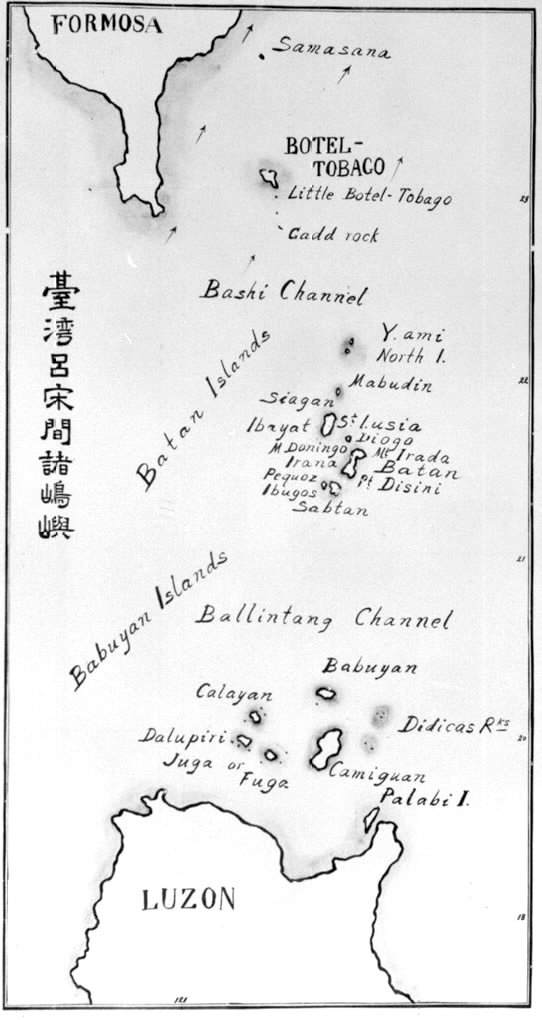
The "Bashi Channel" is located between the southern tip of Taiwan and the Philippines. Toward the end of the Pacific War, Japanese transport ships carrying supplies and soldiers became targets for US submarines in these waters, and it is said that over a hundred thousand precious lives were lost to the sea.
Once called the "Graveyard of Transport Ships" and the "Devil's Sea", it remains a tragic location where many remains still rest on the ocean floor. However, across borders, the people of Taiwan have long and respectfully memorialized the Japanese war dead through places like Chao-Yin Temple and Bao'an Temple.
After numerous on-site inspections, our goal is to establish a new memorial service in this land, acknowledging the shared suffering of Asia, and to pass on to the next generation our pledge never to repeat the tragedy of war.
Collaborating with places of prayer protected by the people of Taiwan.
Activities to ensure historical tragedies are never forgotten, serving as a foundation for peace.
This is a two-part project combining a Buddhist memorial service organized by Catuddisa Sangha and attendance at the official memorial ceremony on site.
We look forward to your participation in this journey of memorialization across borders.
Attendance at the Bashi Channel War Dead Memorial (Chao-Yin Temple)
* Separate application to the organizing body is required to attend.
Official Website (Organizing Body)Evening: Catuddisa Sangha Reception
Catuddisa Sangha Hosted Memorial Service at Bao'an Temple
* Services will rotate among various sects in 30-minute intervals.
* Free to attend. Donations and offerings are gratefully accepted.
We adopt an independent style, meaning participants gather and disperse on-site. Please arrange your own flights and accommodations.
Our organization cannot assume responsibility or provide compensation for any accidents, injuries, illnesses, or troubles occurring during the itinerary.
To prepare for unexpected events, we strongly request that you purchase overseas travel insurance individually.
To participate in the memorial service and reception hosted by Catuddisa Sangha, please apply via the Google Form below. The secretariat will contact you with further details.
Go to Registration FormContact Us
cs.sangha.info@gmail.comThe funds entrusted to us will be carefully utilized for Catuddisa Sangha's self-reliance support activities and the Bashi Channel Memorial Project. We also accept donations for "Flower Offerings" at the memorial ceremony here.
Enter details in the dedicated form
Select the purpose of your donation (e.g., flowers for the memorial, general project support) within the form.
Receive bank account information
After submitting the form, the designated "Japan Post Bank Transfer Account" will be displayed.
Transfer funds
Please transfer the funds from a nearby financial institution or via online banking.
Representative, Catuddisa Sangha
Shigenori Sugawara
Until now, Catuddisa Sangha has visited sites of poverty and disaster in Asia, focusing on self-reliance support activities such as the "Buddha Bank" alongside local Buddhists. There, I was able to experience a "living Buddhism" that stays close to people's suffering.
However, in order for us to build a truly peaceful future together with Asia, there is something we must not turn our eyes away from. It is the countless lives lost at sea during past wars, and the legacy of our nation's history.
The memorial project at the Bashi Channel in Taiwan is not merely a reflection on the past. Learning from the compassion shown by the people of Taiwan, it is a stepping stone for the future—for us Japanese to re-examine our own roots and pray for "harmony" beyond borders.
Embracing the history of the past, let us weave prayers for peace together.
Since its formation in 2003, Catuddisa Sangha has developed grassroots international cooperation in 19 Asian countries. These are our precious origins for connecting with Asia, and they will be carried forward as our history.
Founder: Katsuyuki Imoto (At the time: Deputy Chief Priest, Ho-on-ji Temple, Fukuoka)
In 2003, "Catuddisa Sangha" was formed at the initiative of Katsuyuki Imoto, who had volunteer experience in Somalia and Cambodia. Originating from Buddha's teaching that "the people of the world are inherently a harmonious gathering (Sangha)", the organization started its activities with a peace march in Cambodia, aiming to build a network of Buddhists and achieve world peace.
2003
Activities (such as peace marches) began in Cambodia, centered around Katsuyuki Imoto. The creation of a network of Buddhists transcending sectarian boundaries began.
2007-2008
Provided support (installing hydraulic ram pumps, etc.) in Tibetan settlements in southern India. Also held the "Worldwide Simultaneous Peace Prayer Service" with local monks.
2009-2010
Conceived the "Buddha Bank," a small-scale, interest-free loan system, and grassroots self-reliance support for Buddhists in places like Bangladesh and Cambodia began in earnest.
2014
Yasunori Kamikawa (Deputy Chief Priest of Kosho-ji Temple) assumed the role of the 3rd Representative, carrying on the spirit of the activities to the present day.
2021
Shigenori Sugawara was inaugurated as the fourth Representative.
A Buddhist version of microcredit aimed at Buddhists in Bangladesh and elsewhere. We supported self-reliance and freedom from poverty through interest-free small loans, circulating the funds within the village via "offerings" made upon repayment.
A system in Cambodia and elsewhere where seed rice and livestock were lent out and repaid after harvest. It provided a framework for living cyclically and self-sufficiently on the land, stepping away from capitalist competition.
A project to purify and preserve reservoirs essential for daily life. Based on the Buddhist spirit of harmony with the natural environment and cherishing all living things, we improved infrastructure that supports life.